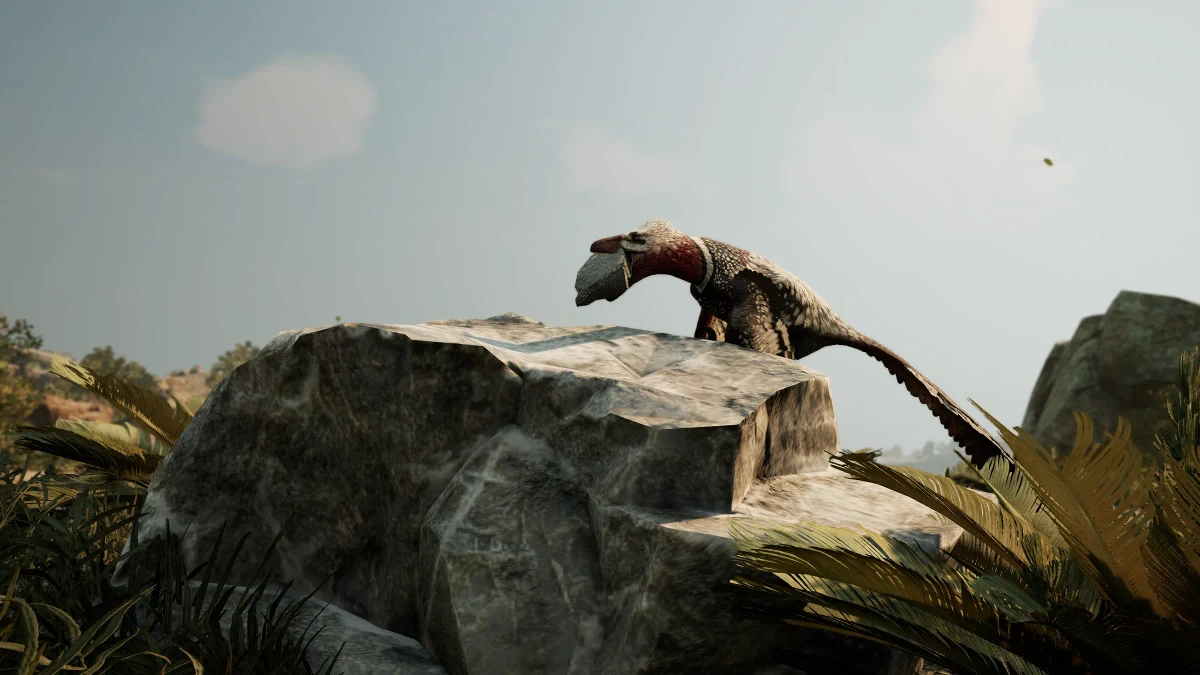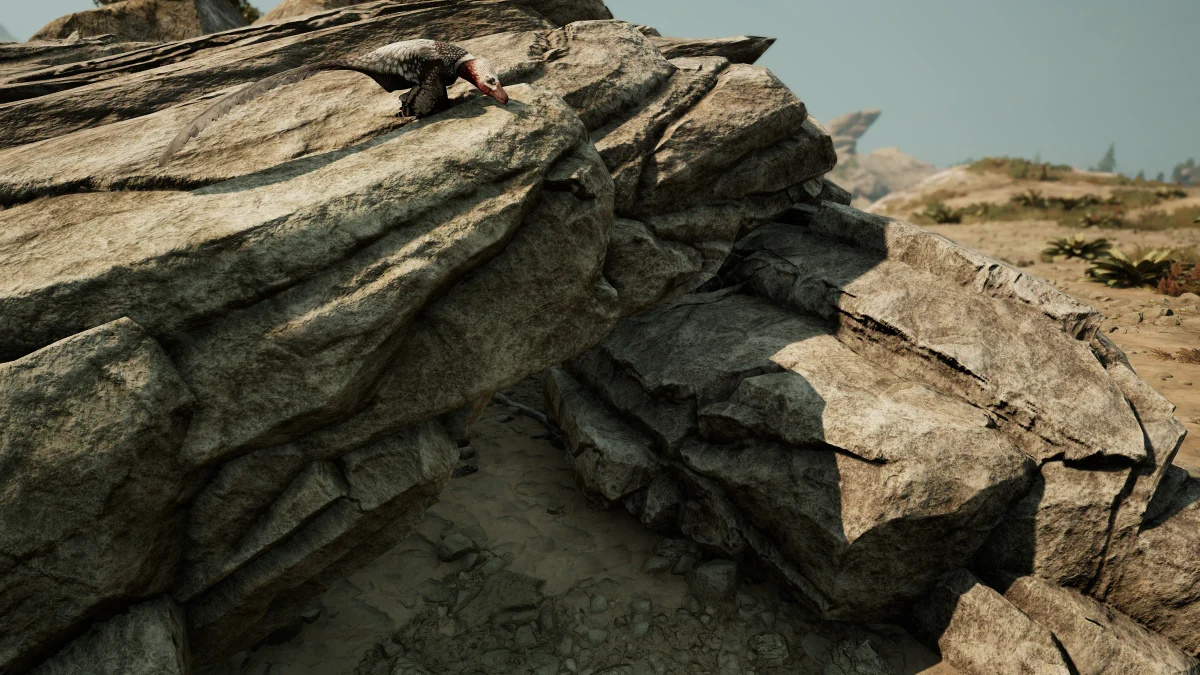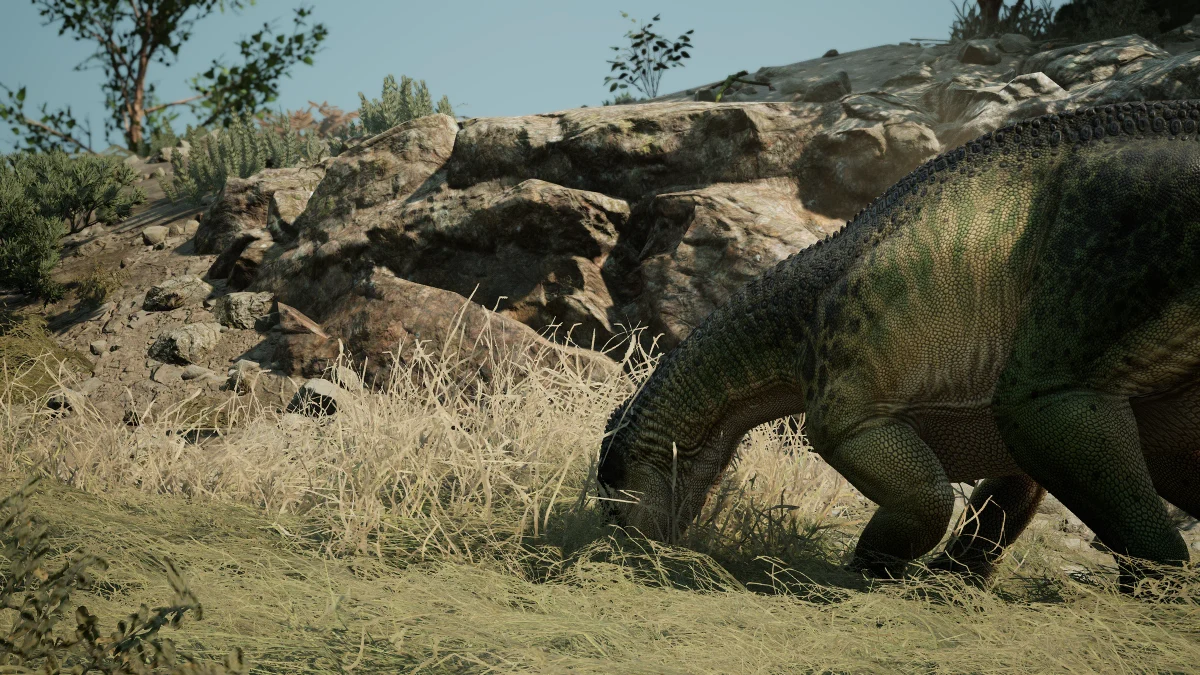
Hello sprouts. We would like to start this edition by thanking you for your continued support as we progress through alpha. Rosa recently passed 750 members, which is very exciting. Even if we have not been posting for a while, there has been a lot of work behind the scenes that we would like to share.
Deinocheirus profile release
Our very first full profile has been released, brought to you by Spyre.
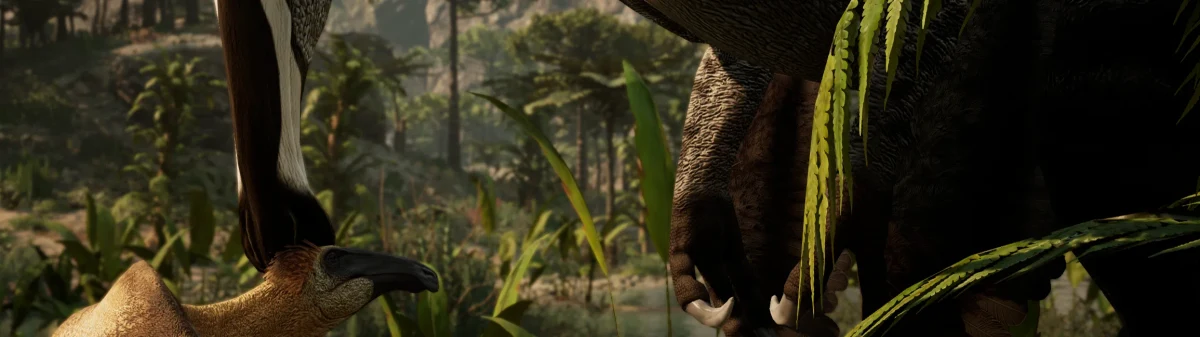
Hello, I am Spyre, the author of Deinocheirus. Deinocheirus is a semi-aquatic herbivore that thrives on both land and water. Males, known as cobs, form territories around freshwater with behavior greatly inspired by polygynous birds. They are highly aggressive towards other Deinocheirus males, but brothers form bonds strong enough to work together in a raft. Females, known as pens, are solitary, nomadic and migratory. They take inspiration from birds such as the wandering albatross, with many seeking out another female to pair with for life. Deinocheirus behavior is greatly influenced by the ongoing season, with the monsoon season providing plenty of resources and the harsh wildfire season taking it away. I hope you enjoy playing this as much as I enjoyed writing it.
Alpha profile events
With the release of our first profile, we can now host both profile events and character events. You already know what a profile event is, but what is a character event? A character event is centered on your character. It begins with you as a hatchling, nested in alongside the other participants. As you grow, you build your character the way you would in any nesting, with scripted events along the way that help strengthen your character's story. At the end, your character is logged and saved, to be brought back when the server launches. More details and all the technicalities come with future event posts.
Rules, ecosystem and territory
Nery here. I will go over some of the recent rule changes, as well as our biomes and how they work. Our overhauled migration zones and seasons are explained by Corvile, and our territory system is outlined by Kovit.
Recent update log
As some of you have already seen, our in-game rules have been overhauled in their entirety in the most recent update log. There were a lot of minor wording changes as well as some major changes and additions, all of which were stated in detail in the update. You might have noticed some new words in there like home ranges, transient, and our new standard territory rules. Extensive resources are coming, covering terminology, the server and a roleplay guide, but we want to explain some of these changes here first.
The new ecosystem
We have been hard at work changing our entire ecosystem, complete with new biomes and seasons, because of the Riparia map release. Let us dive right in.
We do not have a proper biome map to share yet, as we want to make it as accessible as possible, but here are the biomes by name and how biomes will work.
Main biomes
- Temperate - Tropical - Coastal
Transitional biomes
- Tropical coast - Temperate coast
Water biomes
- Pools: water sources not connected to other water by stream, river, tunnel or waterfall - Waterways: freshwater sources connected to other water by stream, river, tunnel or waterfall - Brackish: the crossover between freshwater and saltwater, which may be either in game - Channels: shallower saltwater between islands - Deep ocean: deep saltwater at the edge of the map
So what does this mean for the creatures in the reserve? Will they have liked and disliked biomes, or will they simply like everything? Neither. We have rethought how biomes affect creatures entirely. In profiles, creatures have certain biomes listed as their home ranges. In those biomes a creature is most comfortable. They can claim and defend territory there, finalize their courtship and nest, and they are adapted to survive and thrive in those environments.
Outside their home ranges they are transient, and cannot claim territory or nest. They may start a courtship in those biomes, but it has to be finalized in a home range. Because of the disadvantages of being transient, they generally do not want to spend much time outside their home range and only wander there when necessary. Hunger is one reason: driven by the threat of starvation, a creature may venture out, though their hunger must be at or below fifty percent for them to start a hunt out there.
Migration zones and seasons
Corvile here. Riparia has a very different set of biomes to Gondwa, so we needed to update our migration zone system and seasons to match. Previously our migration zones were tailored to areas of similar biomes that would flourish and deplete according to the four real-world seasons. With Riparia's more diverse biomes and greater range of forested areas, we wanted to rework the systems to feel more realistic to the map.
Monsoon
- Characterized by frequent rain and storms, which curb the bushfires of the previous season. - The rain replenishes the dry earth and causes rockfalls, mudslides and fallen trees that may block common travel routes. Hazardous, but it also leaves plenty of mud and loose rocks for nesting. - Stimulated by the rain, fish populations increase as they spawn. Fruits, berry bushes and mushrooms burst into life across the map, and drier areas bloom.
Windswept
- The monsoon rain is blown away by persistent drying winds. Drier conditions make for poorer food and water quality. - More corpses appear around the map as animals suffer from the lack of resources, which is a scavenging opportunity for crafty carnivores and also a higher chance of disease spreading. Colder temperatures lower immune systems, further increasing the risk of sniffles and stomachaches being passed around. - Plant life becomes more dormant and stores energy. Roots become a nutritious, starch-rich food option, and the seeds and nuts that sprouted from the monsoon blooms fall within easy reach of foragers.
Wildfire
- After drying out all of last season, warmer weather causes dry storms to brew. Dried-out vegetation catches fire easily from heatwaves and lightning strikes. - Critters displaced from their homes by fire are seen moving around the map more often. - As more storms roll in, rain becomes slightly more frequent and brings a reprieve to the brushfires. The fires expose mineral licks and charcoal in their wake, as well as the bones of those unfortunate enough to have fallen to the flames or to last season's sicknesses. - Some plant species rely on fire to germinate their seeds and flowers. From the ashes, patches of blossoms and seedlings begin to rise.
I drew a lot of inspiration from the seasonal patterns of my home in Australia, which I think is underused. Passing the torch to Kovit for the rest.
The new territory system
Kovit here. Alongside the rule rework, we wanted to review our territory rules and flesh them out so they are consistent across every profile. Every territorial creature can challenge others of their species, as well as carnivores of the same size, the size above and the size below. When a creature has offspring or adoptees, they can challenge a carnivore of any size. Territorial carnivores can also challenge other carnivores that have hatchling or juvenile young. Individual profile guidelines may list further situations where a specific creature can challenge an interloper, but the majority follow this ruleset as a base.
We hope that consistent territorial behavior across species makes it easier to remember who you can be territorial towards and who can be territorial towards you. Feedback on this system is welcome once beta opens.
Growing up
One thing that has always bothered me, Archie, is how one-dimensional growing is. As a hatchling through sub-adult you are simply a worse version of your adult form. The journey is treated as a means to an end rather than something to enjoy. No longer. I am reworking how the hatchling through sub-adult stages feel and function.
Stats and abilities
Starting with the hatchling, juvenile and adolescent stages, I am editing certain abilities to better fit the needs of those stages and to make them feel like a fully playable and rewarding part of your creature's life. For example, while adolescent, the Barsboldia dash becomes a long sprint, so you can escape predators more easily while you are at your most vulnerable. On reaching adulthood it becomes a normal, short-winded dash. Other creatures get their own changes.
Sub-adults stay frailer than their full adult form, but this is made up for by their increased speed and agility. In some cases having a sub-adult in a fight is better than having a full adult, particularly against faster prey.
Growth times
Growth times should feel familiar to regular realism players up to sub-adult. From there, the whole period from sub-adult to full adult takes roughly as long as it took you to reach sub-adult in the first place. If it took you an hour and a half to reach fresh sub-adult, expect roughly another hour and a half to reach full grown.
Do not despair. Archie has been hard at work making sure the sub-adult experience feels balanced, rewarding and dynamic. Reaching full adult should feel like a real accomplishment rather than something to take for granted.
Modding
Since we are all here, I might as well show off some modding work. First the mutation skin pack and the creator mode additions, and then one of our custom mechanics.
The mutation skin pack
The current plan is to include pseudomelanism, leucism, axanthism, xanthism, erythrism and chimerism. Every vanilla playable on our roster will have three separate skins of each mutation, except chimera and xanthic. This also means the albino and melanistic skins get two extra variations on top of vanilla.
You might have noticed an oddball in there: chimerism. That skin presents as two vanilla skins put together, though unlike our mixskins it appears as though they have been split right down the middle. There is a video of our very first chimera skin on our TikTok.
Creator mode and PVE, in Rosa's Additions
Alongside the mechanics work, Rosa's Additions also adds a range of creator mode items. We have implemented grazeable grass, shelter rocks of varying sizes and, most notably, mineral licks.
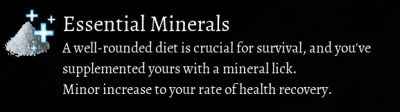
Besides being a source of food, a mineral lick gives the player a long-lasting passive buff to health recovery. That is particularly useful while afflicted with Severe Wounds, which drastically reduces health recovery.
Severe Wounds, in Rosa's Additions
Severe Wounds is the first of several custom mechanics coming to Rosa. It was conceptualized by Spyre and coded by CptFacepalm.
Severe Wounds encourages realistic engagements and adds weight to sustaining a life-threatening injury. It runs in three stages.
Adrenaline
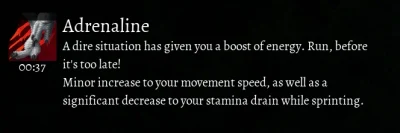
- Applied when the player is hit to thirty percent health or below, so it can only happen in combat. It grants a minor increase in movement speed and a significant decrease in stamina drain while sprinting, for forty five seconds. It exists to encourage and help the player disengage from whatever brought them to that point, before it is too late.
Severe Wounds
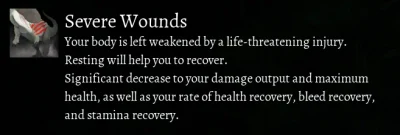
- Once adrenaline wears off, the player is given the Severe Wounds debuff. This is where the injuries catch up. It majorly reduces damage output, health pool, and health, bleed and stamina recovery. It lasts a maximum of fifteen minutes, and can be shortened by resting or by holding eighty five percent or more food and water.
Severe Wounds: recovering
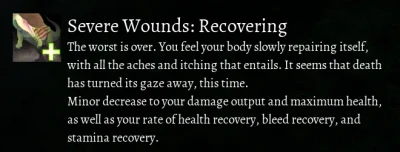
- After Severe Wounds the player rolls into the last stage. It works the same way, with the difference that the debuffs are much less severe. It lasts a maximum of ten minutes and can be shortened in the same ways.
Here is Severe Wounds in action.
Ending notes
Thank you all for the support you have shown us. It has been a long road since we started, nearly a year now, and we genuinely appreciate seeing people so excited for the project. Even after a year, we do not have an estimate for release: we want to be sure everything we build is to our vision and made in a way that accommodates our players.